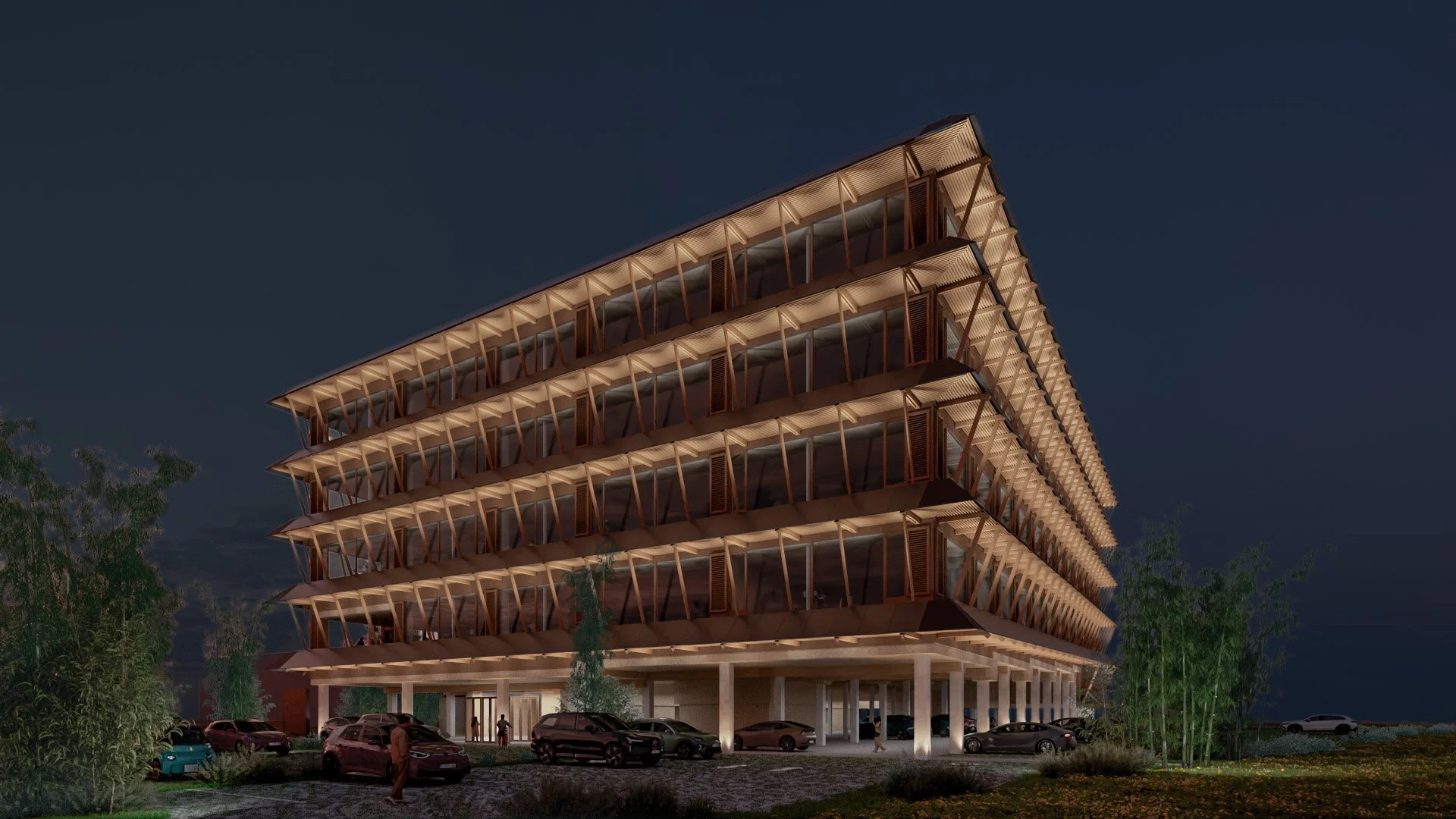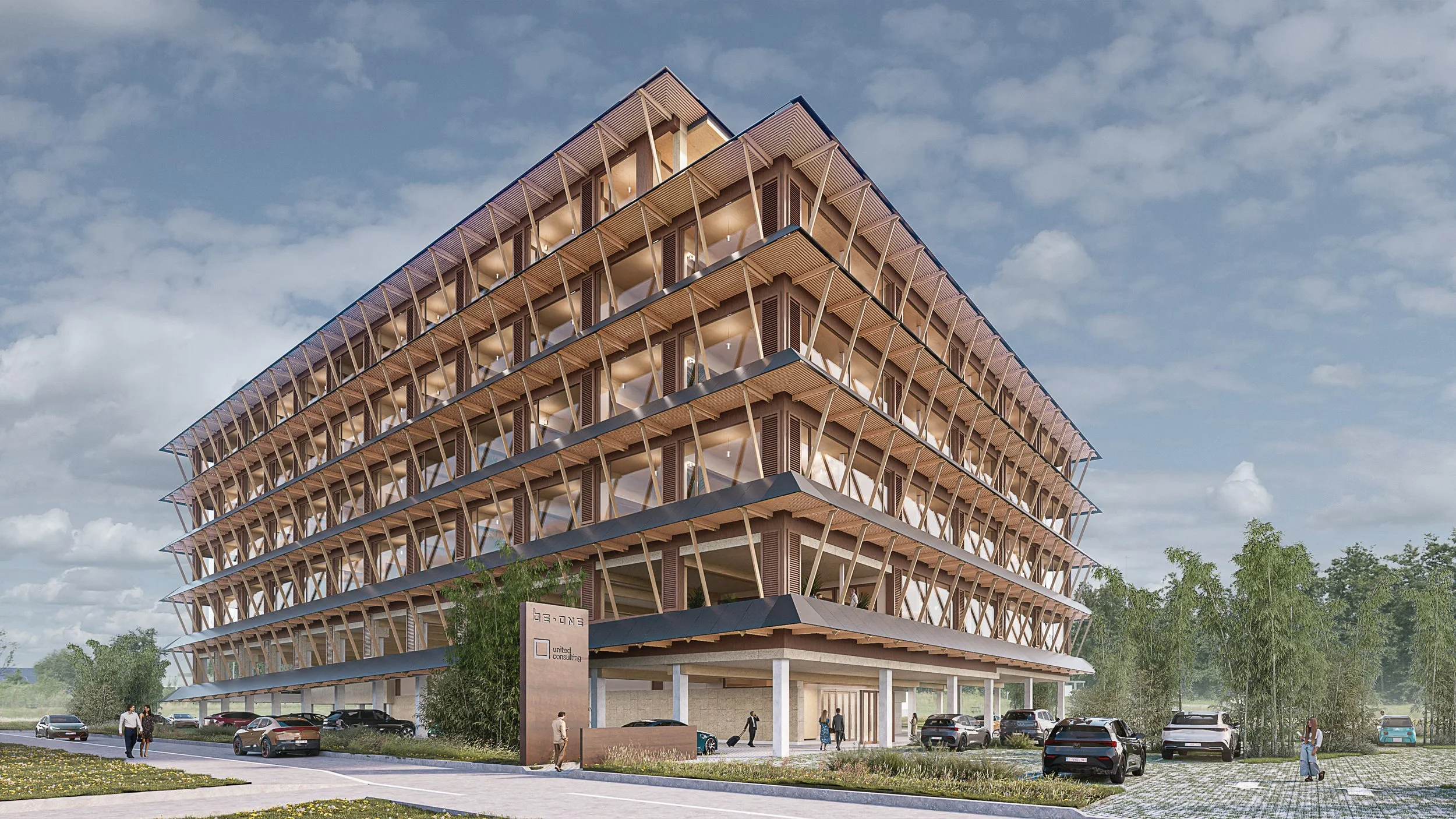
A NEW LANDMARK FOR BELGIUM’S ESG FUTURE
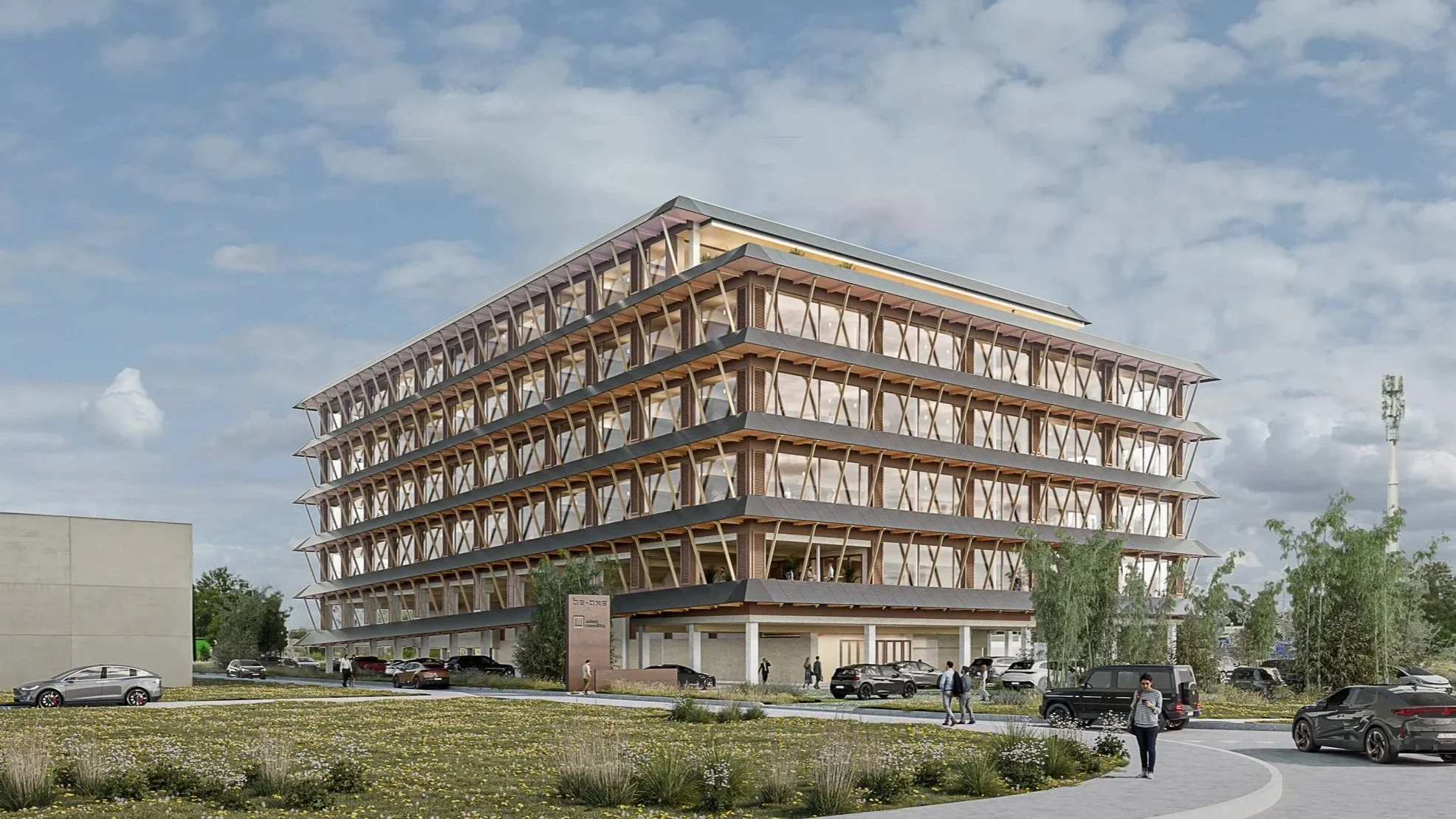
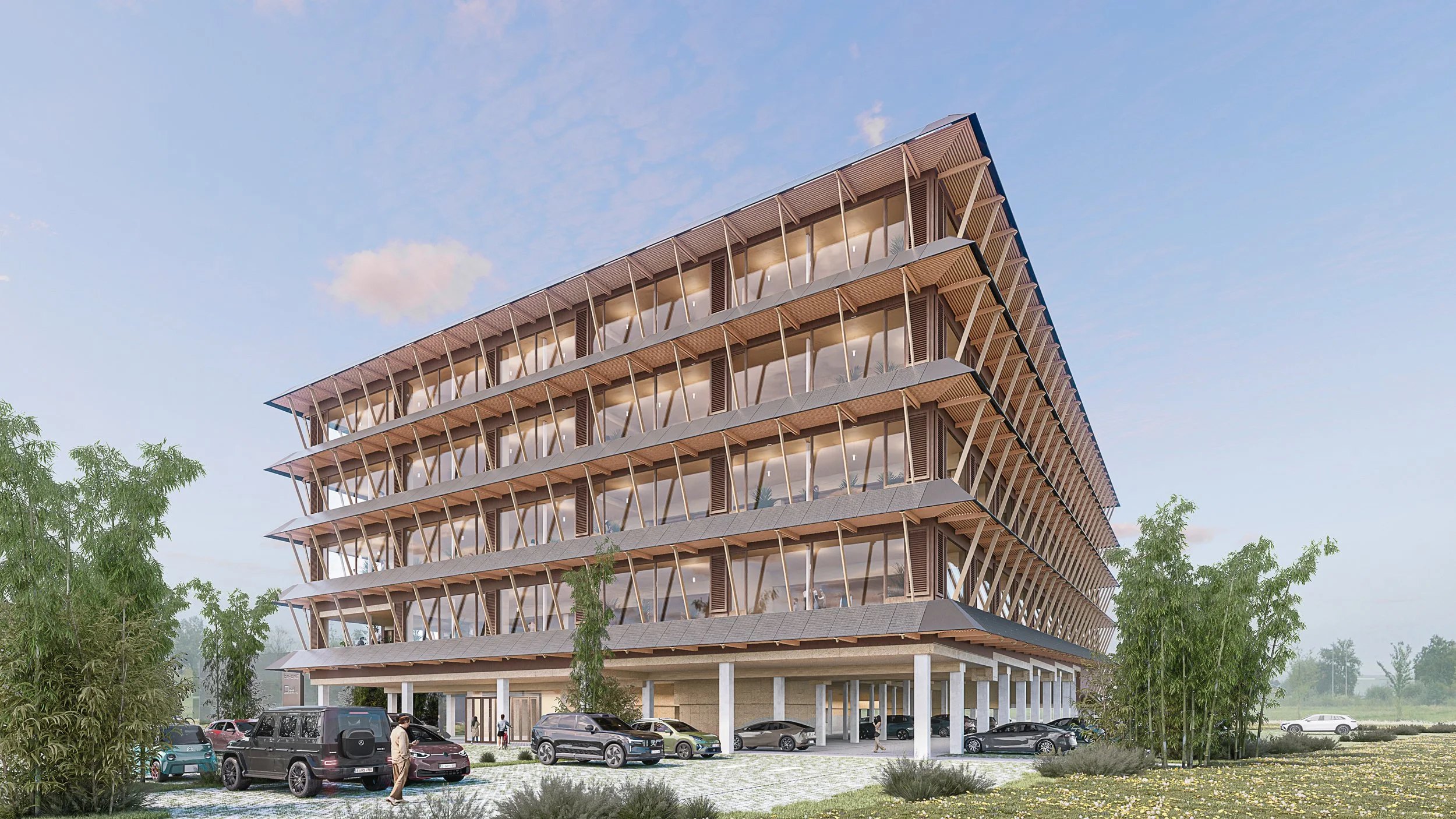
Be-One introduces Belgium’s first office building where Environmental, Social, and Governance principles are not merely ambitions but the architectural DNA itself. Rising as a new landmark in Puurs, the building is conceived as a living demonstration of what responsible development can achieve when innovation, material honesty, and human wellbeing converge. Its full timber structure, circular design logic, and radically inclusive spatial concept make it a pioneering model for the next generation of workplaces. Be-One is not just a building—it is a commitment to a future where sustainability is visible, tangible, and experienced every day.
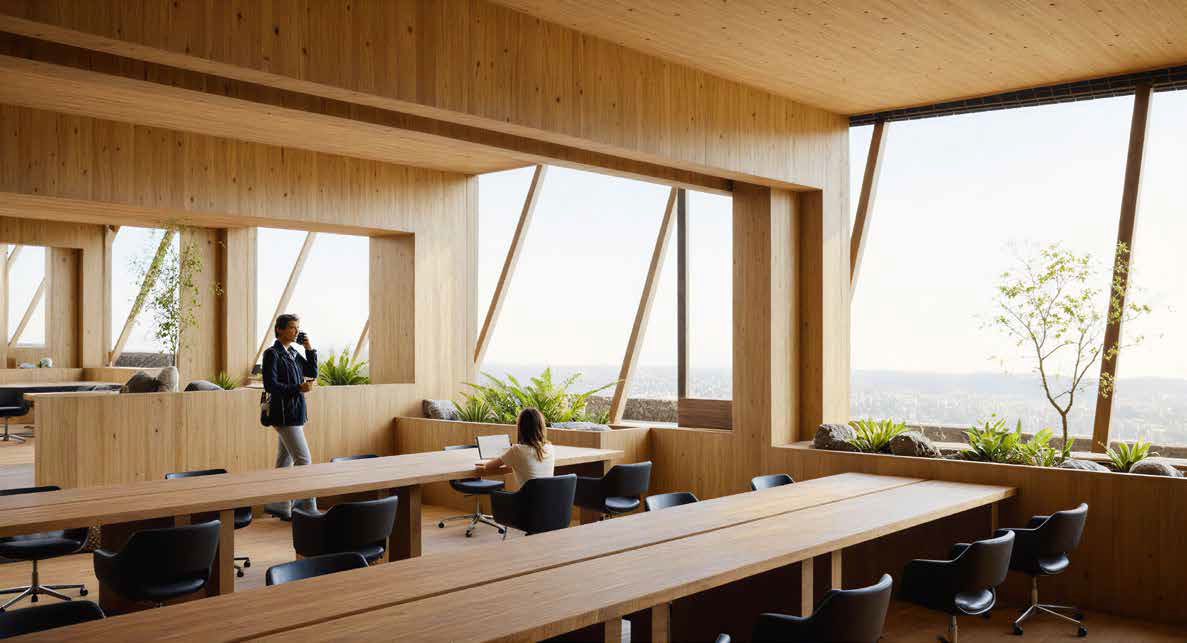
A SOCIALLY INCLUSIVE WORKPLACE SHAPED BY NATURE
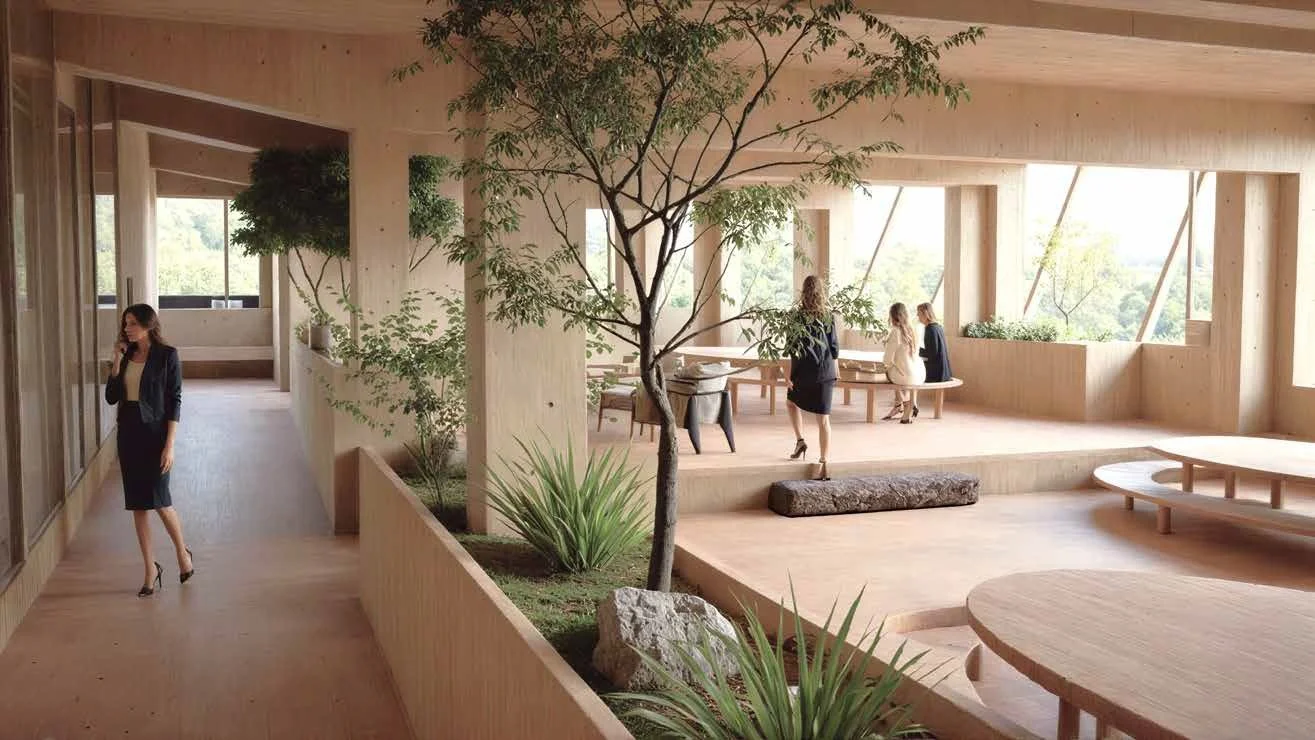
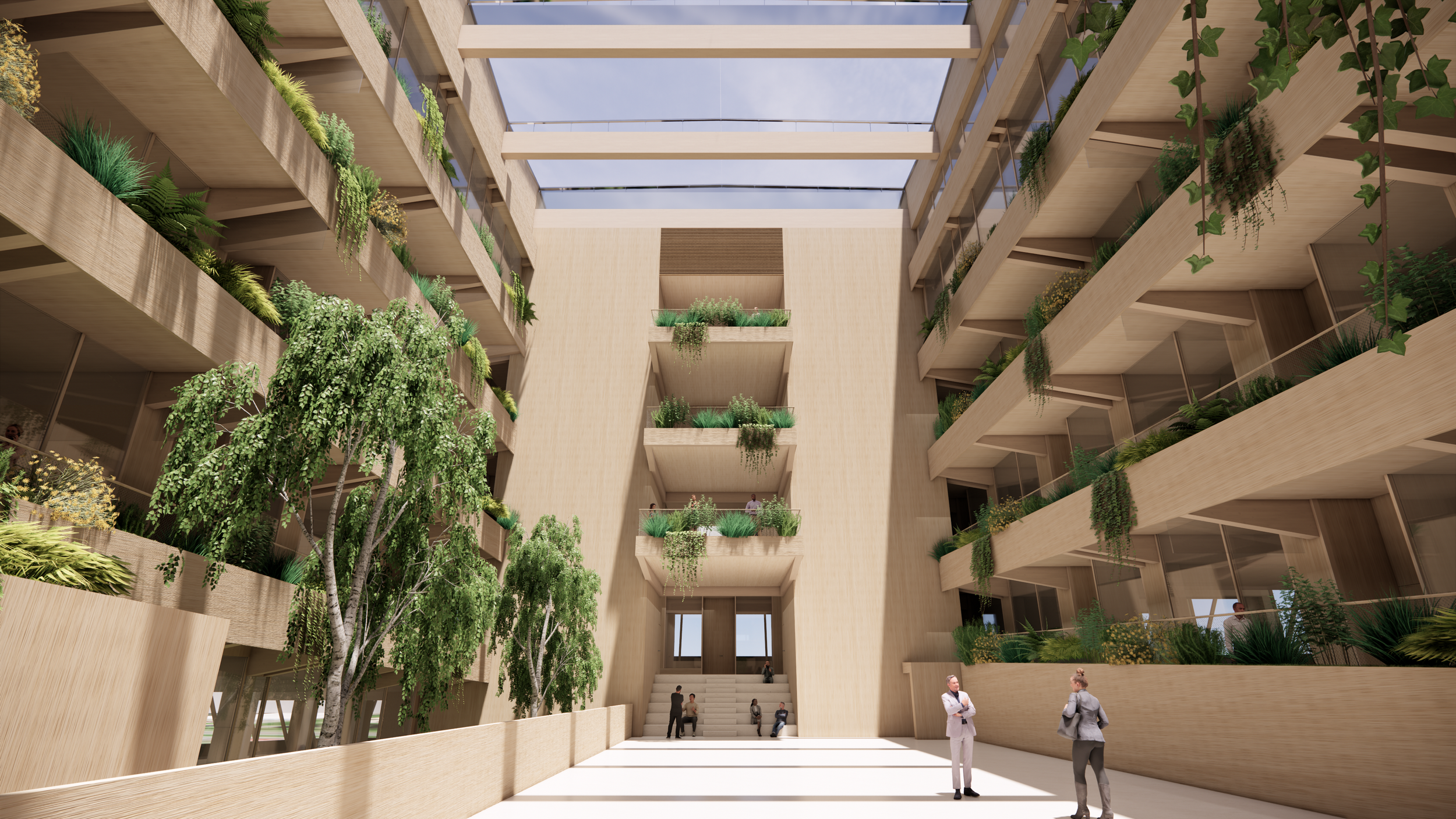
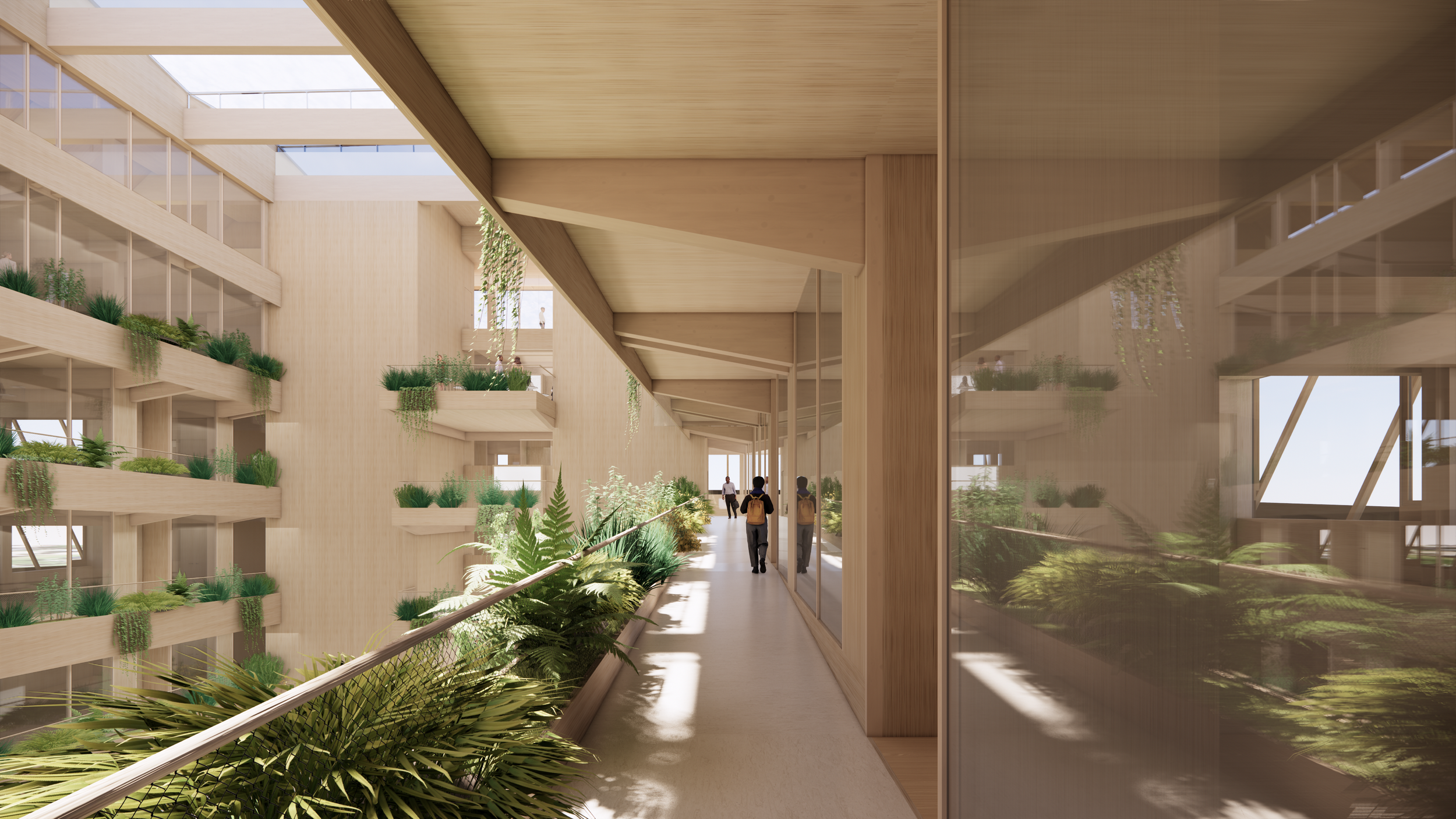
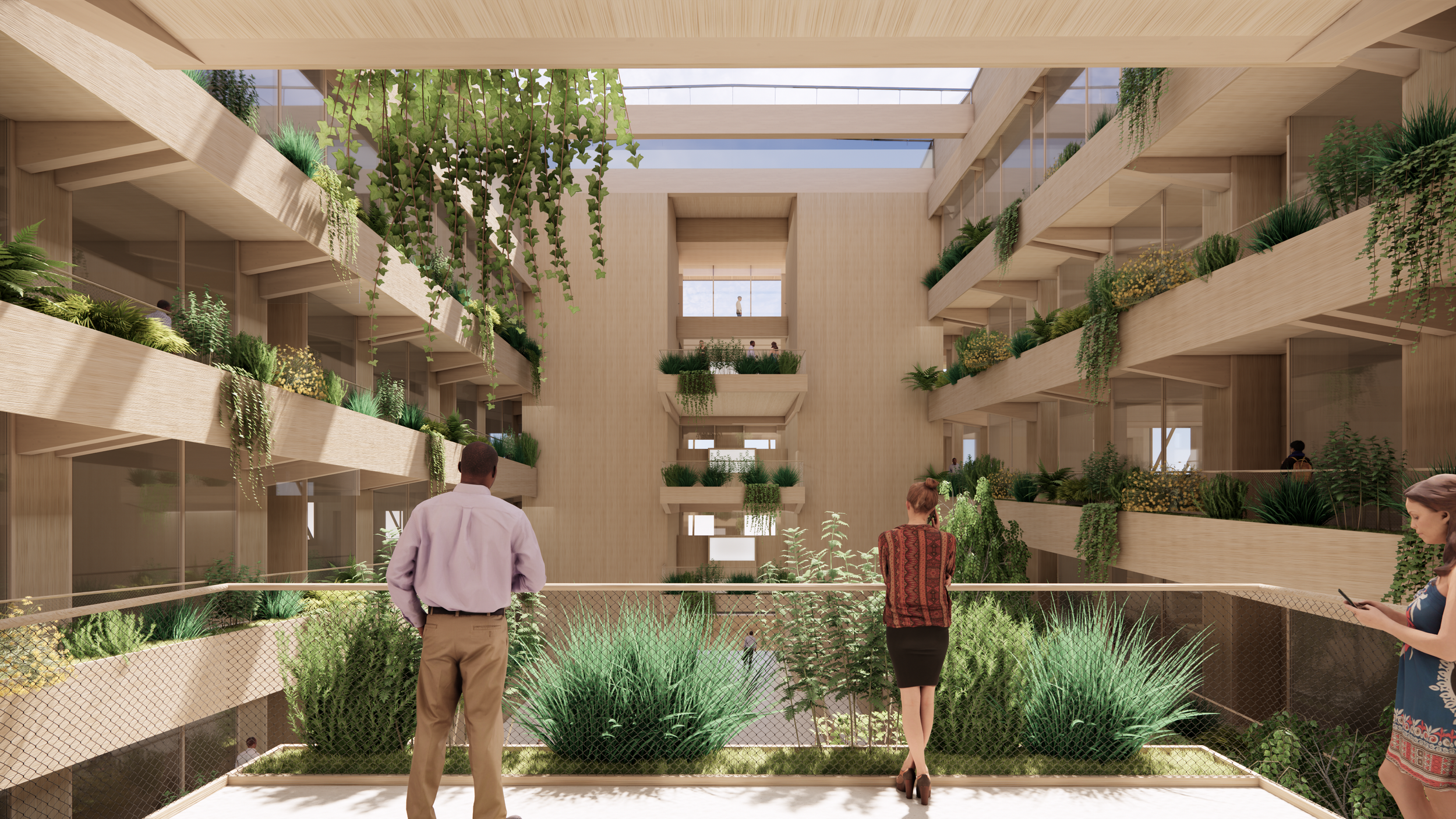
Be-One’s social dimension is expressed through biophilic design, inclusive circulation, and a spatial concept that encourages movement, connection, and wellbeing. The building’s most iconic feature is its 30 metre high continuous walkway, allowing anyone to reach the top floor without stairs or lifts. This gentle, uninterrupted path creates a shared journey through wood, plants, and daylight, transforming daily routines into moments of health and interaction. Indoor walking meetings, cloister like loops, and a natural step counting rhythm make physical activity part of the workday. The result is a workplace where equality, accessibility, and wellbeing are embedded in the architecture itself.
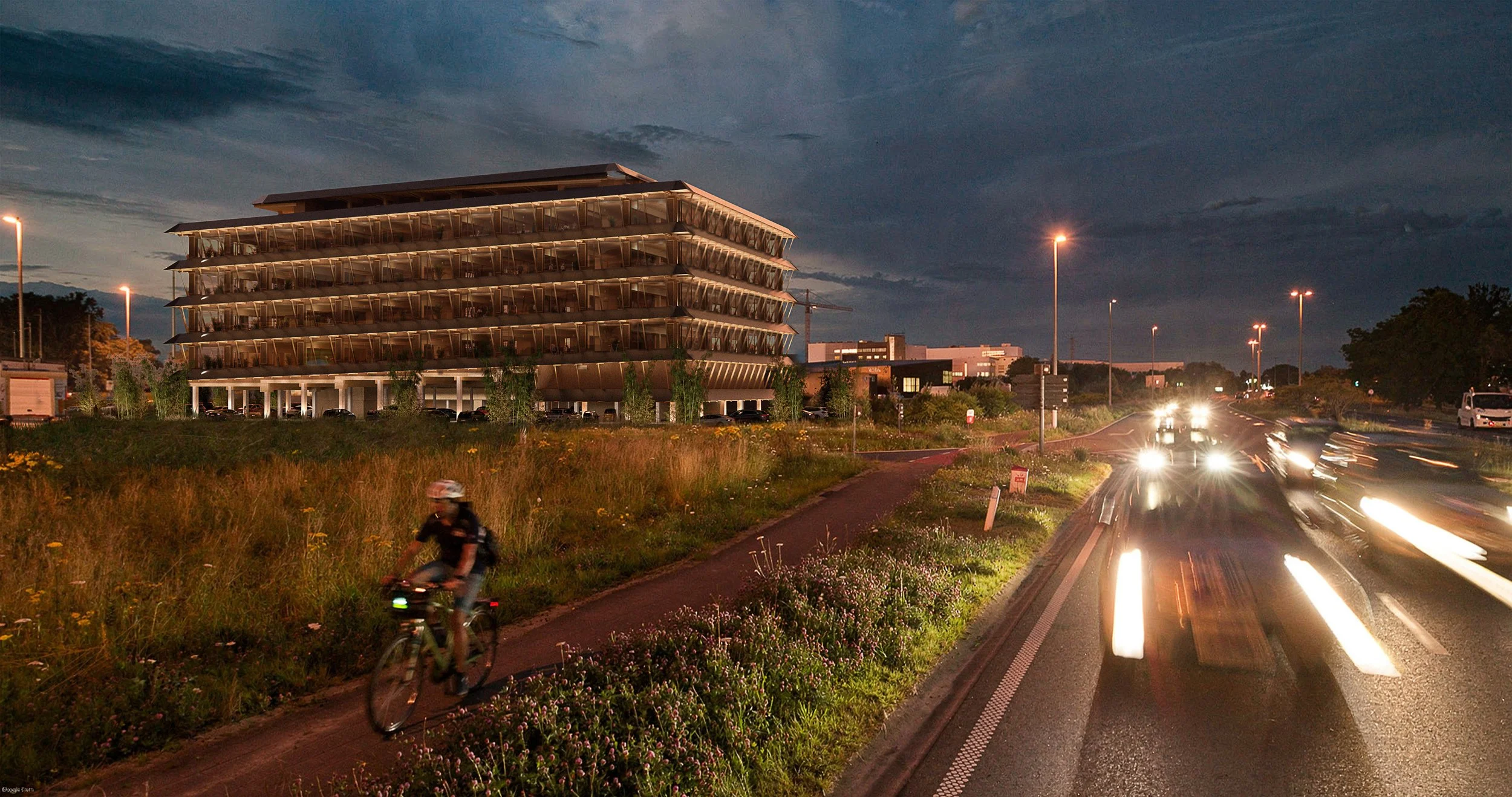
THE CONTINUOUS PATH: A SYMBOL OF INTEGRATED ESG
At the heart of Be-One lies a powerful architectural gesture: a continuous, gently ascending path that winds through the entire building. This movement embodies the integration of E, S, and G in one spatial experience. It replaces mechanical transport with human energy, replaces hierarchy with equality, and replaces fragmentation with continuity. Walking side by side, users experience the building as a shared landscape rather than a stack of floors. This path is the project’s signature—an architectural metaphor for progress, connection, and collective responsibility.
ENVIRONMENTAL PERFORMANCE AS A DESIGN ENGINE
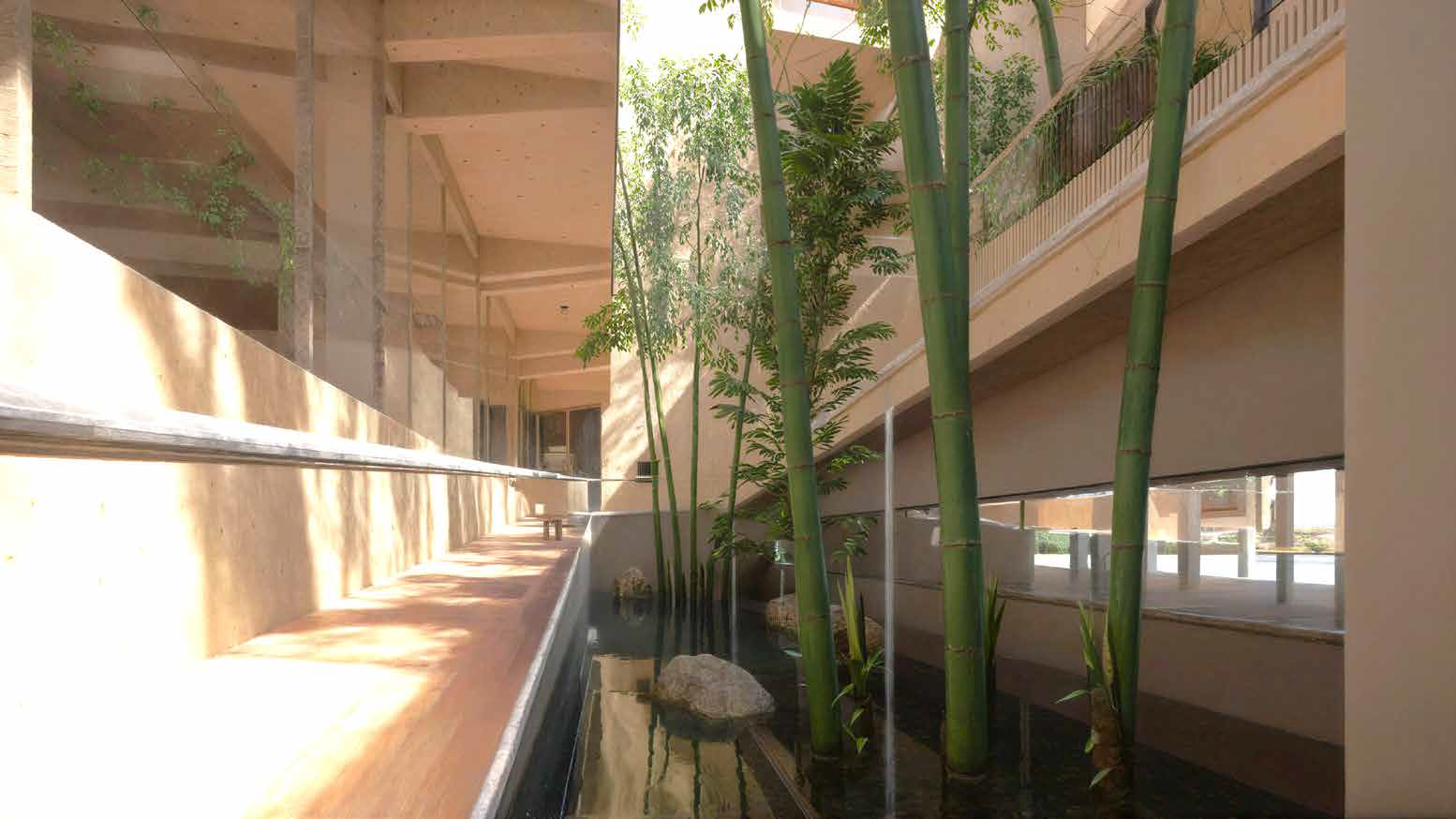
The building is engineered to be energy positive, storing more CO₂ than it emits thanks to its 100% wooden construction and the complete absence of concrete above the foundations. Every component is selected for circularity, low embodied carbon, and long term reusability. The architecture minimizes its physical footprint, preserving open ground and enabling a landscape that supports biodiversity. Water management is integrated into the site as a regenerative system rather than a technical add on. Natural light shapes the entire spatial experience, reducing energy demand and creating a calm, daylight driven interior. Be-One demonstrates that environmental excellence is not a constraint—it is a creative force.
GOVERNANCE THROUGH RESPONISBLE CHOICES
Governance at Be-One is not a policy—it is a built reality. The project embodies responsible investment, responsible consumption, and responsible behaviour through its material choices, low tech systems, and transparent design. By prioritizing durability over complexity and simplicity over automation, the building encourages conscious use and long term stewardship. Its open, barrier free circulation reinforces equality and shared responsibility. Every decision—from the sourcing of materials to the building’s operational philosophy—reflects a governance model rooted in clarity, accountability, and future proof thinking.
BE-ONE: BELGIUM’S FIRST FULLY INTEGRATED ESQ OFFICE LANDMARK
Be-One is setting a new benchmark for sustainable architecture in Belgium. In Puurs, the company is developing the country’s first office building where Environmental, Social, and Governance principles are not add ons, but the very foundation of the design. The result is an iconic wooden structure that redefines how a modern workplace can look, feel, and perform.
Environmental Innovation
The building is conceived as a positive energy, low impact ecosystem. Every design choice reinforces long term environmental responsibility:
— Full timber construction with no concrete, enabling large scale CO₂ storage and drastically reducing embodied carbon.
— Circular materials and low tech systems that minimize resource use and simplify maintenance.
— Minimal physical footprint, preserving open space and enabling future adaptability.
— Advanced water management integrated into the landscape.
— Biodiversity driven site design, with vegetation and natural habitats woven into the building’s surroundings.
— Natural light as a founding principle, shaping the architecture and reducing energy demand.
Be One is not just energy efficient—it is designed to give more back to the environment than it takes.
Social Wellbeing at the Core
The building’s social dimension is expressed through its form, its materials, and its daily user experience:
— A 30 metre high, single floor continuum that allows people to walk all the way to the top without stairs or lifts.
— A biophilic interior where wood, plants, and daylight create a calming, human centred atmosphere.
— Inclusive circulation that encourages side by side movement and spontaneous interaction.
— Indoor walking routes inspired by a cloister, supporting walking meetings and everyday movement.
— A design that naturally promotes health, connection, and equality.
This is a workplace where wellbeing is not a program—it is built into the architecture.
A Continuous Pathway as the Symbol of ESG Integration
The most striking feature of the project is a continuous, gently sloping path that winds through the entire building. This architectural gesture unites the E, S, and G dimensions in one movement: a shared journey upward, accessible to all, powered by human energy rather than machinery.
Be One is more than an office. It is a landmark for Puurs, a prototype for future workplaces, and a statement of what ESG can become when fully integrated into architecture.
Governance Through Design
Be-One embeds responsible behaviour into the building itself:
— Responsible investment and consumption through durable, low impact materials.
— Equality and inclusion reflected in the building’s open, barrier free circulation.
— Low tech systems that encourage conscious use rather than automated over consumption.
— A governance philosophy where transparency, simplicity, and long term stewardship guide every decision.
The building becomes a daily reminder that governance is not only policy—it is practice.